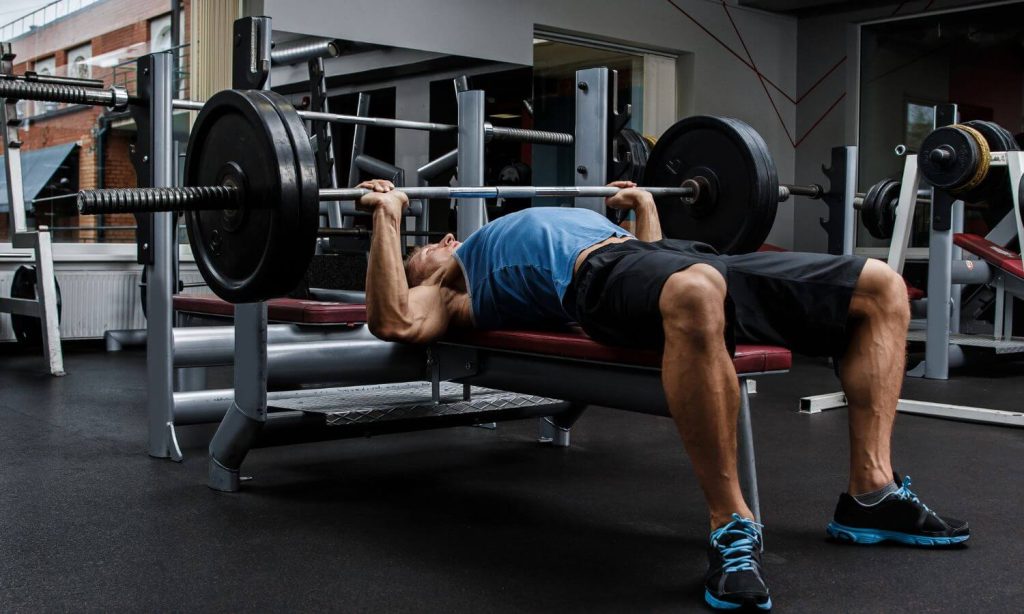
Abstract: Resistance training plays an important role in sports specific strength and conditioning programs, and it may be noted that most sport actions involving striking, throwing, jumping or rapid acceleration movements, are performed at peak power (PP). Previous research suggests the range for PP is between 30-80% of 1 repetition maximum (1RM) strength for the bench press (BP) exercise. This study will investigate the optimal load (OL) for PP output on the BP exercise in trained individuals, as to contribute to existing literature and allow for appropriate prescription of exercise, to athletes and individuals requiring power enhancement. Fifteen recreationally trained male subjects (exercise >150min/week) (mean±SD age 29.06±7.99y, height 1.74±0.69m, and body mass 78.75±10.55kg) performed single repetitions at 30, 40, 50, 60, 70 and 80% 1RM on the free weight barbell BP. Analysis revealed there were significant differences between the power measures of 30-80% of 1RM (p<0.05). Specifically, post hoc testing revealed significant differences between 40% 1RM and 80% 1RM (p<0.05); 50% 1RM and 70% 1RM (p<0.05); and 50% 1RM and 80% 1RM (p<0.05). Highest mean PP occurred at 50% 1RM (802.67±128.87 Watts), followed by 40% 1RM (775.47±84.77 Watts), 30% 1RM (737.33±89.69 Watts), 60% 1RM (715.60±99.57 Watts), 70% 1RM (662.47±114.84 Watts) and 80% 1RM (611.73±171.14 Watts). Findings from this study suggest 40-50% 1RM would provide the greatest PP output on the BP exercise and should be used as prescribed load for power development.

